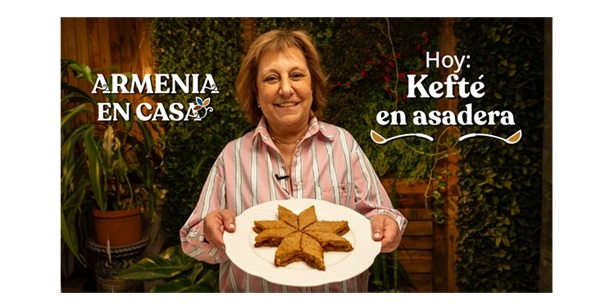
Kefté is much more than seasoned minced meat: it is the story of a dish that crossed empires, survived migrations, and found a new culinary home in the Río de la Plata.
There are dishes that carry the entire map of human history within their recipe. The kefté—also known as kofta, köfte, or kyufta, depending on the geography that welcomes it—is one of them. Although today it is associated with the everyday, family cooking of many communities in Argentina, tracing its true origin requires drawing a timeline that takes us thousands of years back to a mythical region where deserts, mountains, and ancient trade routes cross.
Far from belonging to a single culture or modern borders, gastronomic studies place the cradle of this preparation in an immense cultural corridor: the space comprising ancient Persia (modern-day Iran), the Anatolian region, and the Caucasus.
The Secret is in the Pounding
Even language hides the archaeology of this dish. The word kefté derives from ancient Persian roots directly linked to the action of "mashing" or "pounding" the meat. Long before modern meat grinders existed, the technique consisted of patiently pounding the meat on stones or wooden mortars until achieving a fine, malleable paste capable of blending the local spices.
This primitive yet effective method gave life to a mixture so versatile that it ended up adopting multiple shapes—round, elongated, flattened—depending on the region that adopted it.
The Armenian Bridge and Living Tradition
Within this vast Middle Eastern universe, the Armenian people played a fundamental role in the evolution of the dish. With a deep-rooted historical presence in Eastern Anatolia and the Southern Caucasus, Armenian communities became the great vehicle for disseminating these recipes.
Through the Silk Road trade routes and constant migrations, different versions of kyufta expanded and adapted. For many food anthropology researchers, contemporary Armenian cuisine represents one of the oldest, most complex, and best-preserved expressions of this culinary family, keeping alive production techniques that have remained intact for centuries.
From the Caucasus to the Argentine Roasting Pan
The last great chapter of this journey was written in the late 19th and early 20th centuries, driven by the migratory waves that crossed the Atlantic. Armenians, Turks, Syrians, and Lebanese arrived at the port of Buenos Aires, bringing the memory of their homeland's flavors in their suitcases.
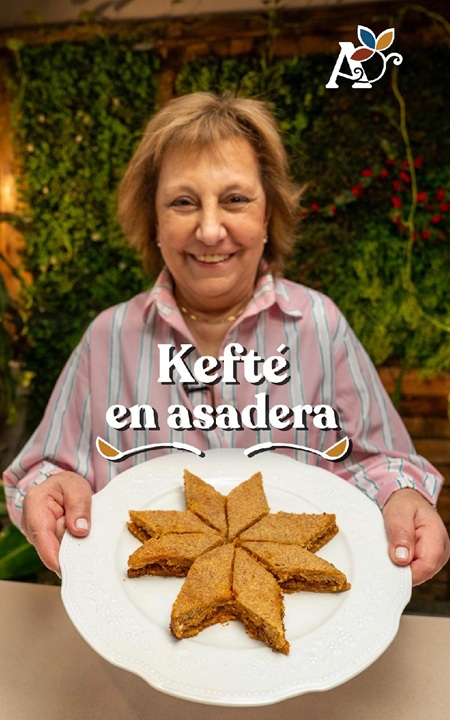
Upon encountering a different geography in Argentina and, above all, the abundance and quality of local beef, the dish underwent its own criollo metamorphosis. From this cultural miscegenation, a version was born that is now a staple in thousands of Argentine homes: "tray-baked kefté". This baked, practical, and communal variant adapted the original individual shapes into local baking pans, becoming the centerpiece of Sunday lunches.
The journey of kefté proves that the most enduring recipes are not those belonging to a single people, but to the paths that connect them. A shared heritage born in the palaces of Persia that, centuries later, continues to steam in the kitchens on our side of the map.
https://youtu.be/mo6qwMfT1oM?si=lfgkHK8tMeH60Ory
https://www.instagram.com/reel/DZ_AlWTuL8h/?igsh=MTl4Zng5aHljbHJ1dg==